
Lights, camera, LinkedIn Live action!
Lights, camera, LinkedIn Live action!
By Andrea Rannard-Lambert, Director of Partnerships & Communications
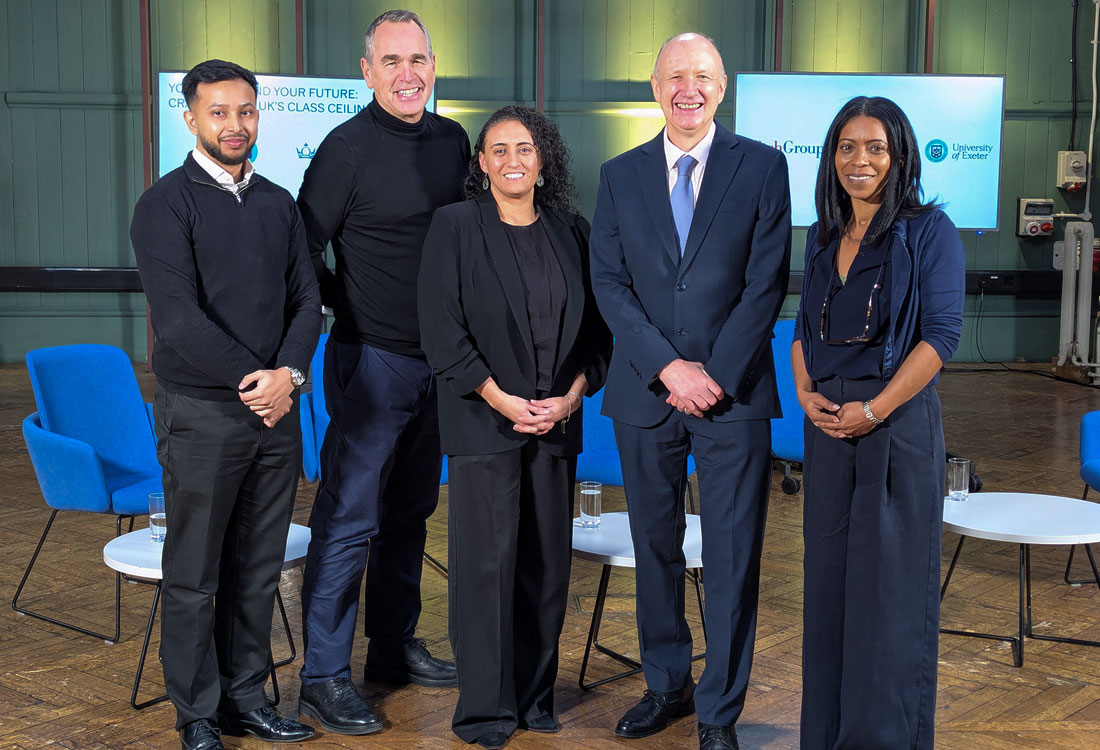
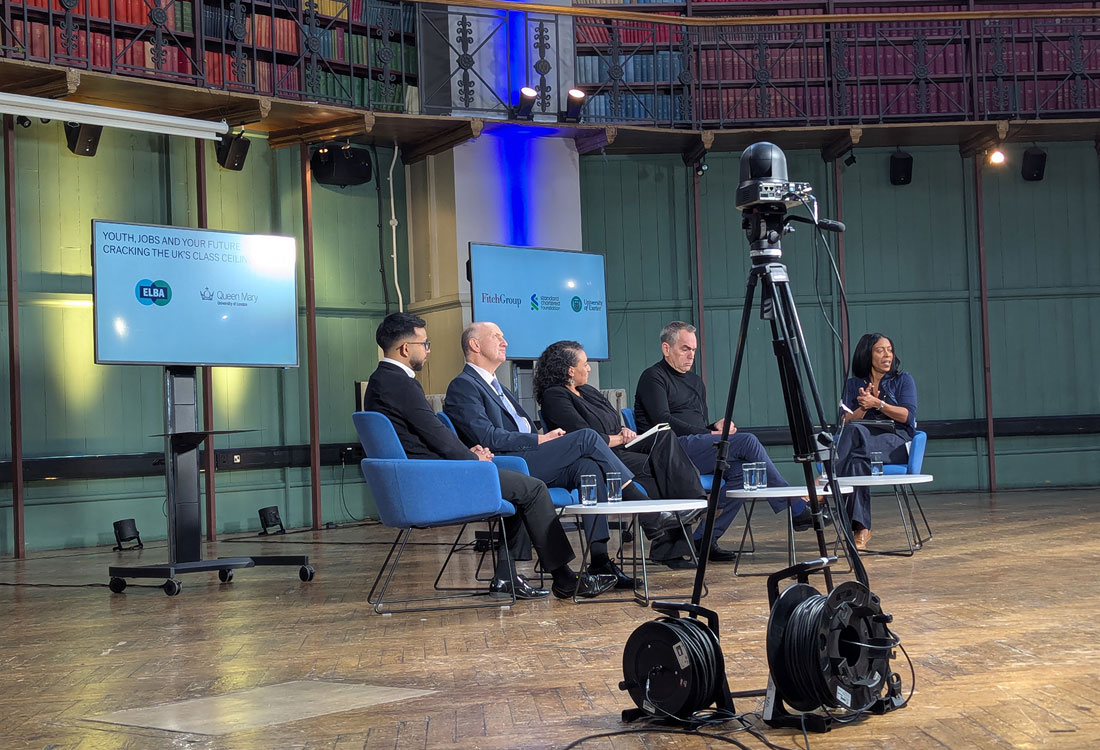
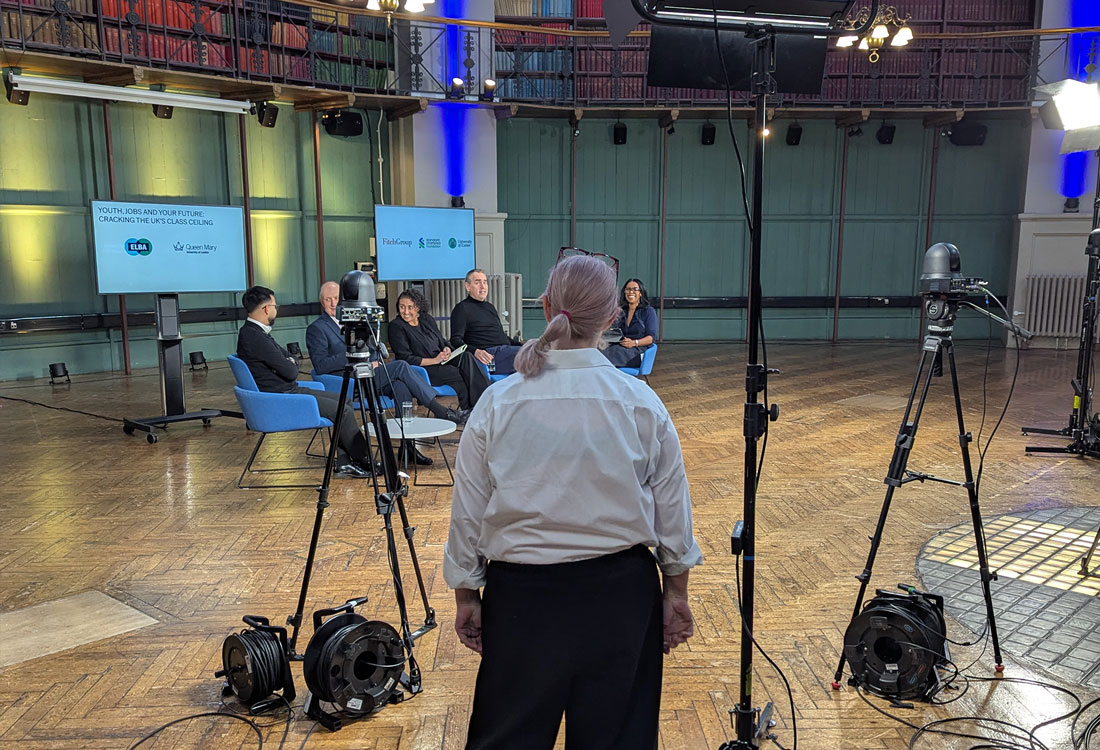
Hosted by Queen Mary University of London, a high-profile cross-sector panel assembled for a hard-hitting LinkedIn Live debate about social mobility, its impact on young people entering the UK market and provide hope for the next generation.
Youth, Jobs and your Future: Cracking the UK’s Class Ceiling brought together a business, charity and university panel who candidly shared their lived experiences and the challenges faced by young people from lower socio-economic backgrounds trying to enter the UK job market – the unwritten rules that can limit entry and progression – whilst highlighting the strengths, opportunities and partnerships that exist to support young people and unlock talent.
With entry-level roles shifting rapidly, the rise of AI job application screening and with the recent publication of The Rt Hon Alan Milburn’s From a Welfare State to a Working State: a new settlement for the next generation report – an independent review of the increase in the number of young people who are not in education, employment or training (NEET) – the live discussion could not have been more timely.
The panel
Professor Lee Elliot Major OBE
The UK’s – and possibly the world’s – first Professor of Social Mobility Professor Lee Elliot Major OBE (University of Exeter), set out the social mobility landscape for listener and how employers have a key role to play in addressing the barriers that limit fair access to opportunity. Sharing his own lived experience – the first person in his family to go to university – and highlighting practical steps for employers from his new book Cracking the Class Code, Professor Elliot Major presented employers and policy makers with a challenge and young people with a sense of hope.
Lee explored the cultural barriers – how you speak, the way you look, and how you navigate and negotiate – that exist. For Lee, he has modelled himself to fit into the system and, in his view, we need much more clear navigation guides for people that include how you speak to your manager. We need to look at the long term – the next 10 years – about how we address challenges to social mobility including public transport and housing.
Hind Naciri
Head of Impact and Community Engagement for Europe at Standard Chartered, Hind Naciri talked warmly about her experience entering and navigating the workplace, along with Standard Chartered’s focus of working in partnership with its ecosystem (supply chain, charity partners, other banks, etc) to unlock opportunities for young people from all different background.
Hind stated the importance of being able to accept help – it doesn’t mean you are failing – and this includes the power of sponsorship. Hind talked about the compound challenges of Intersectionality, along with AI and asked important questions about how we build the infrastructure for people to succeed, which can’t happen in isolation. We need hiring managers, early careers and other departments to be working together. Standard Chartered is working with charities like ELBA and others in its ecosystem to create opportunities and Hind encouraged us all to work together and think differently so we all feel the collective benefit.
Farhad Hussain
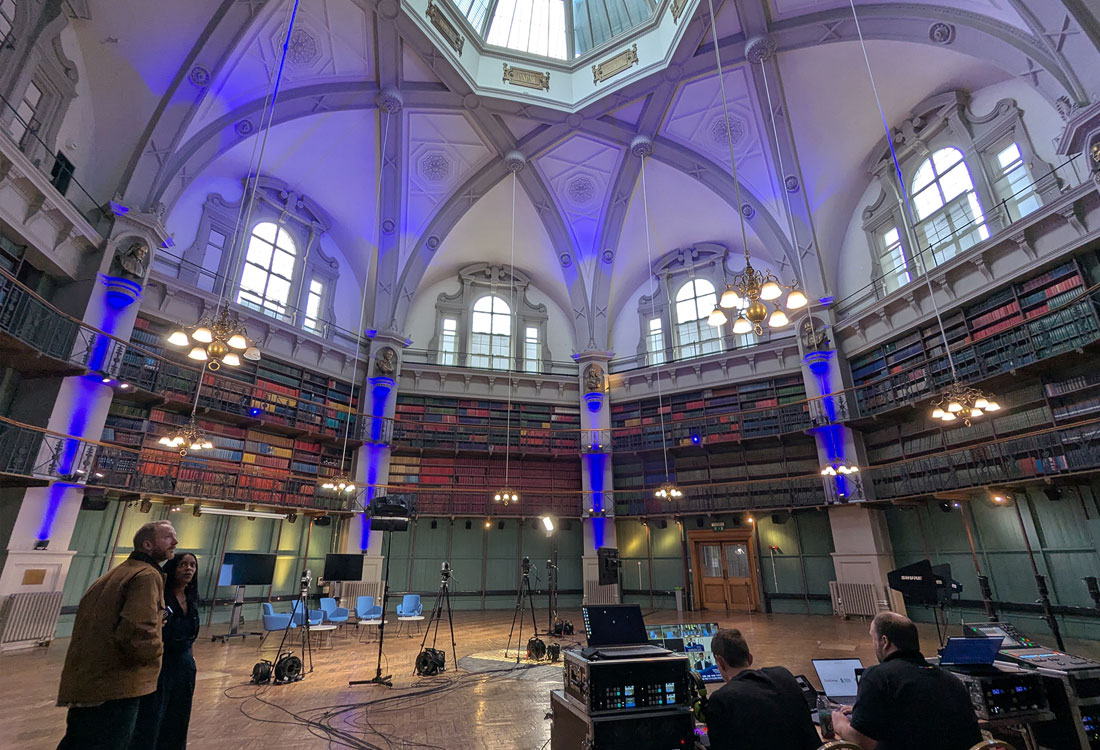
Tower Hamlets resident Farhad Hussain – who commented on living just five minutes down the road from Queen Mary University of London’s Octagon Building, where the broadcast took place – is a graduate of the University of Westminster and an ELBA Eagles ELBA Eagle alum. Farhad, Senior Market Research Associate at Fitch Ratings, shared his personal journey with listeners. Inspired to give it a go, he benefitted from ELBA’s award-winning graduate programme that opened up a placement with Bank of America and helped him to unlock networks and build his confidence in the workplace.
For Farhad, Eagles was a great platform to kickstart his career and it was through the programme’s peer network that he heard about the opportunity with Fitch Ratings, with Farhad benefiting from the “cross pollination” Eagles provides. Farhad conveyed that in his current role he always encourages interns to ask questions.
Farhad’s top piece of advice is to use your university careers service as early as possible. There are so many opportunities you can access.
Professor Colin Bailey CBE
Professor Colin Bailey CBE, President and Principal of Queen Mary University of London shared his own personal experience, which started with an apprenticeship, to today where he leads the UK’s top Russell Group university for social mobility. Colin shared a comment he experienced when from a former employer when he was younger when he asked for a pay rise – a comment about his social class – which has stuck with him to this day. Colin went to university despite having completed an apprenticeship and being in a good job – as he saw others going and wanted to give it ago. He graduated and grabbed the opportunity to do a PhD and moved into university academic leadership roles.
Colin spoke openly about the role of universities in supporting young people from different backgrounds and how his institution is rising to the challenge. Colin shard that he has personally witnessed bias all the way including – to this day – “you don’t sound like a real Vice Chancellor!” For Colin, his institution is really passionate about diversity and understands that the institution is just one link in the chain of social mobility – working with primary and secondary schools, sixth forms and colleges – and looking at different pathways into university, not just A Levels but T Levels too.
Colin spoke about how Queen Mary University works with over 200 companies purely on social mobility – and many more employers – to make sure the University’s students and graduates succeed in those companies. Colin’s message to employers: when you think about your bottom line, it is all about the diversity of people and their backgrounds!
Chaired by ELBA’s CEO Julie Hutchinson
The LinkedIn Live event was chaired by ELBA CEO Julie Hutchinson, who spoke about the crucial role charities play in supporting young people and how ELBA brings together different employers, education and the voluntary sector to create opportunities including jobs – including those on the panel today. Julie encouraged young people to think about getting a sponsor and/or mentor – something ELBA has a lot of experience in.
Questions from the audience
Questions were posted from the audience including supporting people who have been in prison. Lee commented that he is a believer in second chances and would love the opportunity to give talks in prisons. “People make mistakes. It’s the social capital and how you are resilient when you get knock backs” but also the value of systemic guides to help people.
Lee commented that is it those in the know who know and his new book focuses on the need for navigation guides along with a rethink about the way we select people. Lee shared how he still gets nervous in interviews – even as a professor – as it’s an alien environment. “You spend so much energy working out what is going on in an interview”. We need to think about second chances and disentangling discrimination including accents and how we look including the pressure on women to wear make-up. Lee made the very important point about how children who have parents in prison face many challenges too.
A question was posted about university curriculums and picking courses. For Colin, he urges those considering university degrees to look at the core skills embedded within programmes and urges universities to work closely with companies as skill requirements are changing all the time. Referencing the Milburn Report, Colin raised the point that work placements are need but they need to be placements that are worth doing.
Top tips from the panel
For Colin, “Grab every opportunity that comes along.” Under aspiration is controlled by you! You can do whatever you want through hard work and grit.
For Hind, “Don’t self-select out of opportunities and know your worth”. Underserved people can feel they are less talented and worthy, but what we look for is talent – skills developed throughout looking after your family, work experience, volunteering.
Lee, “the power of human relationships” and what others can give you, even in a world of AI. Perhaps it’s someone in your neighbourhood. Lee still struggles with asking for help now and most people want to help. Make sure we value human relationships; they are so powerful.
Julie flagged the importance of mentorship and sponsorship.
Core takeaway for young people
With listeners – a mixture of job seekers, students, graduates, recruitment, DEI professionals and more – submitting questions to the panel, the unified voice was one of hope. As Julie summarised, the system has unwritten rules and the market is tough, but you do not have to navigate it alone. Your background and resilience are strengths, and there are concrete pathways and allies ready to back you.
Click here to listen to Youth, Jobs and your Future: Cracking the UK’s Class Ceiling.
Notes:
Youth, Jobs and your Future: Cracking the UK’s Class Ceiling took place on Thursday, 26 November 2026, 11:30 – 12:30 GMT.

To stay up to date with the latest news, opportunities and success stories, please sign up to receive our monthly newsletter, here.